Recommendations for Cordoning Earthquake-Damaged Buildings (FEMA P-2055-2)
Date Published: September 20, 2023
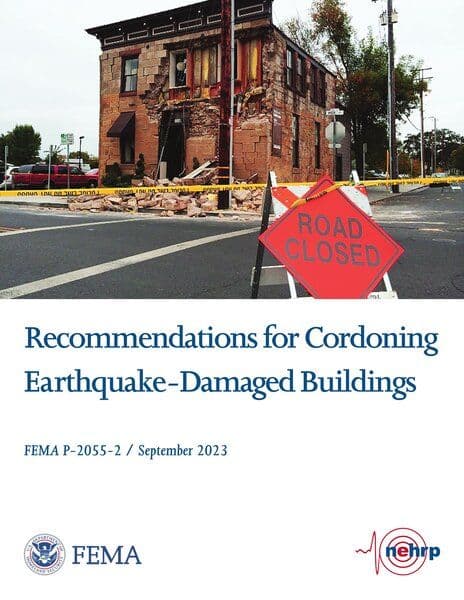
This document provides recommendations for cordoning earthquake-damaged buildings, focusing on various collapse modes and their implications. It includes detailed case studies from the 1985 Mexico City Earthquake and the 1995 Kobe Earthquake, with insights into different collapse mechanisms such as monolithic overturning, story mechanism, torsion, pancake, wall fall, implosion, rubble pile, and cascading collapses. The guidance outlines best practices for determining and managing cordon areas, including considerations for large-scale cordons. Lessons learned from New Zealand's Canterbury earthquakes are also presented to inform cordon area response and recovery strategies.
Access this resource:
Details
Disaster PhaseAfter
File TypePDF
LanguageEnglish
Category
Emergency ResponseRecovery & ReconstructionTechnical Guidance
Audience
Building ProfessionalsCommunity Officials
Hazard Type
Earthquake
Tags
Building ScienceP-2055EarthquakeCordoningCollapse ModesPost-DisasterRecoveryEmergency ResponseTechnical Guidance